What Is the Real Meaning of Halloween? The Truth Behind October 31
Every October 31, neighborhoods glow with jack-o'-lanterns, children dress as ghosts, and families gather for an evening of spooky fun. But what is the real meaning of Halloween, beyond costumes, candy, and haunted houses? Its story stretches back centuries, connecting ancient Celtic seasonal traditions with Christian remembrance and modern celebrations. Halloween has never had just one meaning. It's a holiday shaped by changing beliefs about life, death, the supernatural, and community—and understanding those layers makes today's familiar traditions even more fascinating.

What Is the Real Meaning of Halloween?
At its heart, Halloween is a holiday shaped by three overlapping themes: seasonal change, remembrance of the dead, and the supernatural. These meanings developed across different periods rather than emerging from one single tradition.
For ancient communities, the transition from autumn to winter was a significant moment. For Christians, the days surrounding Halloween became associated with honoring saints and remembering the dead. In modern American culture, Halloween has developed into a largely secular celebration of imagination, costumes, candy, and neighborhood traditions.
That doesn't mean its older meanings have disappeared. They remain visible in the holiday's imagery, from ghost stories and cemetery decorations to flickering lanterns and frightening masks.
The important distinction is that Halloween's historical origins and its meaning to people today aren't necessarily the same. Someone who celebrates with a costume party may have a completely different relationship with the holiday than someone observing All Hallows' Eve as a religious occasion.
Is Halloween Really About Death?
Death and remembrance are important parts of Halloween's history, but they aren't its only themes. The holiday also reflects changing seasons, supernatural folklore, humor, creativity, and community.
Why Is Halloween Celebrated on October 31?
October 31 is the date of All Hallows' Eve, the evening before the Christian feast of All Saints' Day on November 1. It also coincides with the traditional timing of Samhain, the Celtic festival associated with the transition into winter
The Ancient Origins of Halloween: What Was Samhain?
Long before Halloween became associated with candy and costumes, Celtic communities in Ireland and parts of northwestern Europe observed Samhain.
This seasonal festival marked the end of the harvest period and the beginning of winter. In agricultural societies, that transition carried enormous practical importance. Shorter days and colder weather meant preparing food supplies, protecting livestock, and facing the uncertainties of the coming months.
Samhain also developed associations with supernatural beings and the boundary between the human world and the Otherworld. Later Irish folklore describes this time as particularly significant for encounters with supernatural forces.
However, ancient Samhain wasn't simply an early version of today's Halloween. Much of what people believe about its rituals comes from later written sources, and historians cannot confidently reconstruct every ancient custom.
Why Were Spirits Associated With Samhain?
In traditional Celtic stories, Samhain was a liminal period—a time when ordinary boundaries were thought to become less secure. Tales involving supernatural beings helped establish the mysterious atmosphere later associated with Halloween.
Did Halloween Costumes Begin With Samhain?
Disguises have been linked to beliefs about spirits and supernatural encounters. However, the direct historical connection between specific ancient Samhain rituals and modern Halloween costumes is difficult to establish. Later traditions, including Irish and Scottish guising, also contributed to today's costume customs.
How Christianity Changed the Meaning of Halloween
The name Halloween comes from All Hallows' Eve, the evening before All Saints' Day on November 1. In the Christian calendar, All Saints' Day honors the saints, while All Souls' Day on November 2 is dedicated to remembering the faithful departed.
As Christianity spread through Celtic regions, Christian observances and existing seasonal customs influenced one another. The Library of Congress describes Halloween as the result of this blending of Christian and pre-Christian traditions.
This history helps explain why Halloween can be associated with both supernatural folklore and religious remembrance. It also explains why different communities understand the holiday differently.
What Does All Hallows' Eve Mean?
Hallow is an older English term associated with someone holy. All Hallows' Eve literally refers to the evening before the feast honoring all saints.
The name eventually became Halloween, preserving a connection to the Christian calendar even as the holiday developed many secular traditions.
Is Halloween a Pagan or Christian Holiday?
Its history includes both. Samhain contributed seasonal and folkloric associations, while Christian observances influenced its name and religious significance.
Modern Halloween has also developed its own cultural identity. Calling it exclusively pagan or exclusively Christian overlooks centuries of change.
What Do Halloween Traditions Really Symbolize?
Picture an Irish family long ago, carefully carving a frightening face into a turnip. Centuries later, an American family gathers around the kitchen table, scooping seeds from an enormous orange pumpkin.
The materials are different, and the families may have completely different beliefs. Yet both participate in a tradition involving light, darkness, imagination, and the supernatural.
Halloween's most recognizable customs developed through a mixture of folklore, religious practices, immigration, and changing community life. Understanding their origins reveals how the holiday evolved from a seasonal observance into a celebration shared by millions.
Why Do We Carve Jack-o'-Lanterns?
The jack-o'-lantern tradition has roots in Ireland, where people carved turnips rather than pumpkins. Folklore connects the practice to Stingy Jack, a legendary figure condemned to wander with a makeshift lantern.
Pumpkins later became the familiar American alternative because they were readily available and easier to carve.
What Is the Meaning of Trick-or-Treating?
Modern trick-or-treating has connections to older customs such as souling and guising. Participants visited homes, sometimes offering prayers, songs, or performances in exchange for food.
The American version became particularly widespread after World War II, when suburban neighborhoods and commercially packaged candy helped establish today's familiar tradition.
What Does Halloween Mean in Modern America?
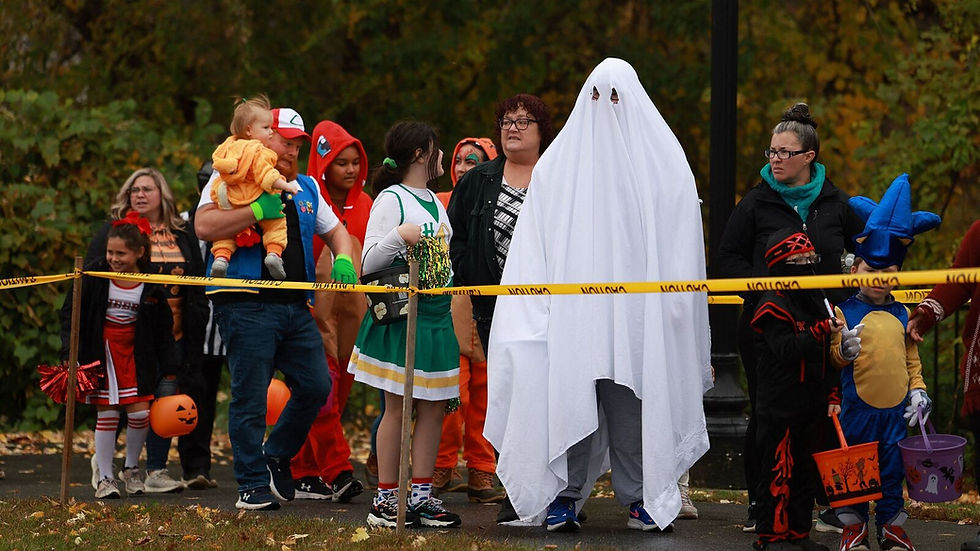
For many Americans, Halloween is now an opportunity to express creativity, spend time with loved ones, and participate in neighborhood traditions.
A child might remember the excitement of choosing a costume. Parents might treasure photographs from years of trick-or-treating. Friends may look forward to their annual horror-movie marathon or costume party.
These experiences give Halloween personal significance beyond its historical origins.
The holiday's supernatural imagery also offers a playful way to confront things that normally frighten us. Ghosts become decorations, skeletons become jokes, and darkness becomes the setting for an evening of laughter.
Why Do People Still Celebrate Halloween?
Halloween offers something for different generations: imagination for children, nostalgia for adults, creative expression for artists, and shared experiences for communities.
Its flexibility is part of its appeal. People can participate through costumes, decorations, storytelling, parties, religious observance, or family activities.
How Can You Create Meaningful Halloween Traditions?
Choose activities that reflect your family's interests. Carve pumpkins together, research local Halloween folklore, make handmade decorations, host a movie night, or create an annual family photograph.
Even small traditions can become surprisingly meaningful when repeated over time.
For those who enjoy celebrating through seasonal fashion, explore our collection of classic pumpkin graphic tees, retro ghost shirts, Halloween family outfits, and vintage-inspired spooky apparel. These designs can add a personal touch to pumpkin-patch visits, Halloween parties, and the photographs you'll revisit for years.
Ultimately, the real meaning of Halloween isn't hidden behind one ancient ritual or a single religious interpretation. It's found in the holiday's layered history and the ways people continue to celebrate it. From seasonal change and remembrance to costumes and neighborhood gatherings, Halloween connects old stories with new memories—and gives every generation an opportunity to create traditions of its own.
Stay tuned for more updates:


Comments